


Vật liệu số lượng lớn tiêu chuẩn hoặc tùy chỉnh
Điều gì tốt hơn cho dự án của bạn?

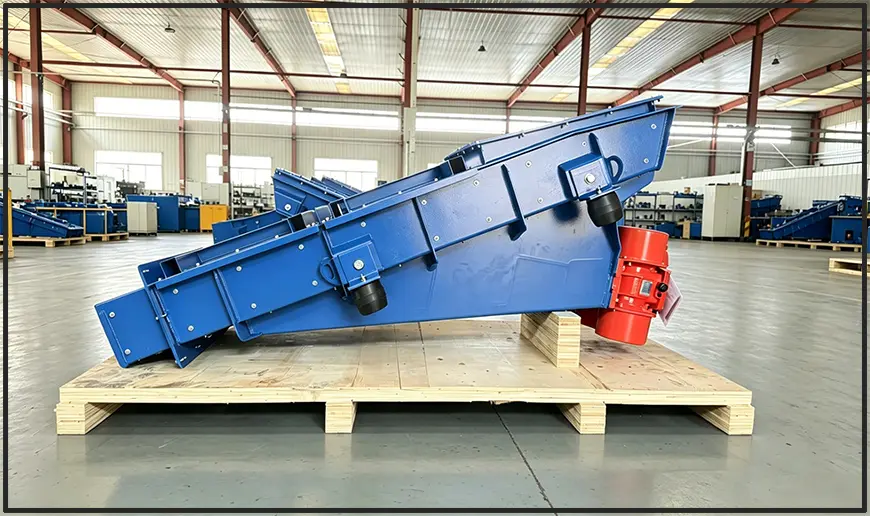
Bộ cấp liệu rung bằng động cơ Các ống lót đóng vai trò là thiết bị cốt lõi để vận chuyển ổn định các nguyên liệu thô như cát thạch anh, tro soda và fenspat trong sản xuất thủy tinh. Những vật liệu cứng, sắc cạnh này liên tục va đập và cọ xát vào các ống lót, gây ra sự mài mòn nhanh chóng. Ống lót bị mòn làm giảm tuổi thọ thiết bị, tăng chi phí bảo trì. Tệ hơn nữa, các mảnh vụn từ ống lót rơi ra sẽ lẫn vào nguyên liệu thô và làm giảm độ tinh khiết và chất lượng của sản phẩm thủy tinh thành phẩm. Do đó, việc lựa chọn đúng loại ống lót chống mài mòn là rất quan trọng đối với các nhà sản xuất thủy tinh để đảm bảo sản xuất liên tục, giảm chi phí và nâng cao chất lượng sản phẩm.
Việc vận chuyển vật liệu thủy tinh đặt ra những yêu cầu khắt khe đối với các lớp lót, chủ yếu bao gồm ba khó khăn chính:
2.1 Tấm thép chống mài mòn (NM400/HARDOX450)
- Thông số kỹ thuật: Độ dày 12-30mm, có thể hàn và uốn cong, độ bền kéo ≥1200MPa, khả năng chịu nhiệt ≤350℃.
- Ưu điểm: Lắp đặt dễ dàng, khả năng chống va đập vượt trội, lý tưởng cho các cửa nạp liệu và máng dẫn liệu có tải trọng vật liệu lớn.
- Nhược điểm: Bề mặt thô ráp dễ bám dính các vật liệu ướt; phế liệu kim loại gây ô nhiễm nguyên liệu thô; trọng lượng tăng cao. - Tải trọng động cơ và mức tiêu thụ điện năng.
- Ứng dụng: Vận chuyển vật liệu khô, sơ xử lý nguyên liệu thô có độ tinh khiết thấp và điều kiện làm việc ngắn hạn với ngân sách hạn chế.
2.2 Lớp lót gốm alumina (92%-95% Al) ₂ O ₃ )
- Thông số kỹ thuật: Độ cứng Mohs cấp 9, độ bền nén ≥2000MPa, khả năng chống mài mòn gấp hơn 10 lần thép carbon, khả năng chịu nhiệt ≤1000℃, bề mặt chống dính mịn.
- Ưu điểm: Khả năng chống mài mòn hàng đầu, không gây ô nhiễm, chịu nhiệt cao và chống dính tốt, phù hợp cho việc vận chuyển nguyên liệu cứng trong thời gian dài.
- Nhược điểm: Dễ vỡ và dễ bị nứt dưới tác động mạnh; việc cố định kép bằng keo và hàn làm tăng chi phí lắp đặt.
- Ứng dụng: Máng cấp liệu, cửa xả và ống khuỷu chịu mài mòn cao và va đập vừa phải.
2.3 Lớp lót UHMWPE
- Thông số kỹ thuật: Hệ số ma sát cực thấp, độ mài mòn chỉ bằng 1/7-1/10 so với thép tấm, khả năng giảm chấn, chịu nhiệt ≤80℃.
- Ưu điểm: Hiệu quả chống tắc nghẽn tuyệt vời, trọng lượng nhẹ giúp giảm tải trọng thiết bị, không gây ô nhiễm và dễ dàng lắp đặt.
- Nhược điểm: Khả năng chịu nhiệt kém, dễ bị biến dạng khi ở gần lò nung nhiệt độ cao; khả năng chống mài mòn yếu hơn so với lớp lót gốm.
- Ứng dụng: Xưởng sản xuất ở nhiệt độ bình thường, vận chuyển vật liệu ướt và phễu dễ bị tắc nghẽn.
2.4 Lớp lót composite gốm-cao su
- Thông số kỹ thuật: Các mảnh gốm alumina được nhúng trong đế cao su chống mài mòn, chịu nhiệt ≤80℃.
- Ưu điểm: Khả năng chống mài mòn và giảm chấn kết hợp, giảm tiếng ồn, cố định chắc chắn và chống rơi vỡ.
- Nhược điểm: Cao su bị lão hóa dưới nhiệt độ cao; giá thành cao hơn so với lớp lót làm từ một loại vật liệu duy nhất.
-
Ứng dụng: Các bộ phận cấp liệu rung và điều kiện va đập mạnh kết hợp với mài mòn, được sử dụng rộng rãi trong ngành công nghiệp thủy tinh.
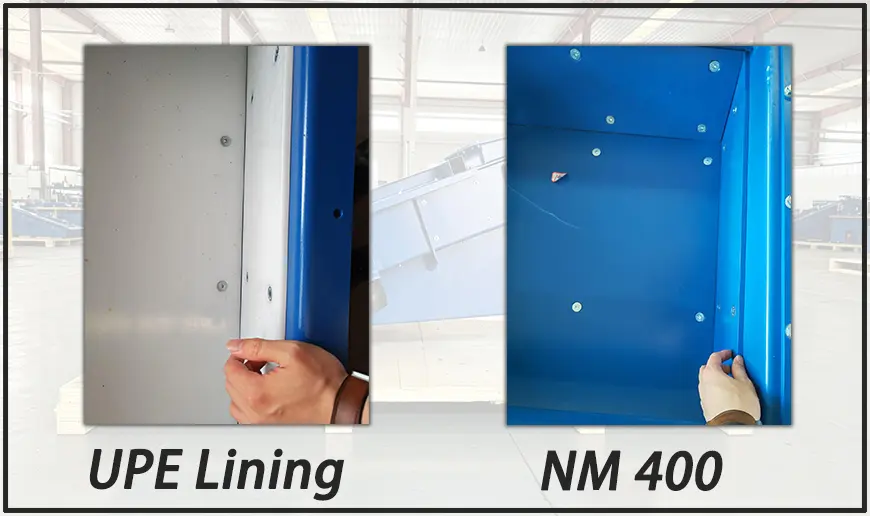
So sánh hai loại lớp lót chống mài mòn phổ biến cho bộ cấp liệu rung: lớp lót UHMWPE (UPE) chống dính và ít gây ô nhiễm, và lớp lót thép NM400 có khả năng chịu va đập cao, cả hai đều phù hợp cho các ứng dụng sản xuất thủy tinh.
3.1 Lựa chọn dựa trên đặc tính nguyên liệu thô
3.2 Lựa chọn dựa trên nhiệt độ làm việc
3.3 Lựa chọn dựa trên hiệu quả chi phí
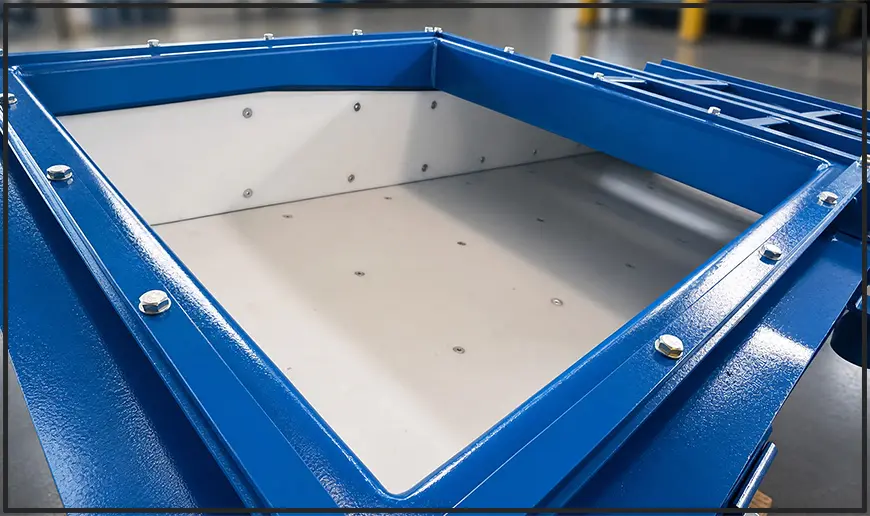
Hình ảnh cận cảnh lớp lót bên trong của bộ cấp liệu rung, cho thấy lớp lót UHMWPE (UPE) nhẵn được lắp đặt để giảm mài mòn, ngăn ngừa vật liệu bám dính và tránh ô nhiễm trong quá trình cấp liệu nguyên liệu thủy tinh.
Việc lựa chọn lớp lót cần cân nhắc kỹ lưỡng các yếu tố như khả năng chống mài mòn, chống va đập, chống ô nhiễm, chịu nhiệt và chi phí. Lớp lót composite gốm-cao su trở thành lựa chọn phổ biến nhờ hiệu năng toàn diện. Lớp lót gốm alumina phù hợp với các ứng dụng đòi hỏi độ tinh khiết cao và khả năng chống mài mòn mạnh. Lớp lót UHMWPE giải quyết vấn đề tắc nghẽn vật liệu ướt, trong khi tấm thép hoạt động tốt trong điều kiện làm việc va đập mạnh trong thời gian ngắn.
Với tư cách là một chuyên gia nhà sản xuất bộ cấp liệu rung VRV chuyên cung cấp các thiết bị cấp liệu rung động cơ tùy chỉnh và các giải pháp lót chống mài mòn phù hợp cho ngành công nghiệp thủy tinh. Chúng tôi cung cấp thiết bị cấp liệu đáng tin cậy, ít mài mòn và chống ô nhiễm, được thiết kế riêng cho việc vận chuyển cát thạch anh, fenspat và các nguyên liệu thô sản xuất thủy tinh khác nhau, giúp các doanh nghiệp giảm chi phí bảo trì và ổn định chất lượng sản xuất.
gọi cho chúng tôi :
008617855911791 e-mail : sales@vrvibratory.com


 mạng ipv6 được hỗ trợ